Employee Development Pathway
Employee Development Approach and Performance
The Company has established a “Lifelong Learning” strategy and developed development plans tailored to employees at all levels. The objective is to enhance competencies in line with job standards and support employees’ career growth and advancement.
The employee development approach is divided into five key areas, as follows:
1. Qualification System
The Company establishes qualification levels to reflect employees’ capabilities in performing their responsibilities. These levels are also used as a basis for determining fair and appropriate compensation.
2. Position System
The Company clearly defines the duties, roles, authority, and responsibilities of each position within the organization. Promotions and qualification advancements are evaluated according to established criteria.
3. Job Rotation System
Employees may be transferred or rotated to different functions or types of work to broaden their experience, develop new capabilities, and support future career advancement.
4. Evaluation System
The Company establishes performance evaluation criteria to support decisions regarding salary adjustments, bonuses, promotions, and qualification advancements. The evaluation process also helps identify employees’ strengths and areas for improvement, enabling further capability development. The Company’s evaluation criteria are based on principles of fairness, appropriateness, and acceptance.
5. Compensation System
The Company’s compensation structure consists of basic salary, competency-based pay, position allowances, and other forms of compensation and benefits, such as overtime pay, holiday pay, and attendance incentives. Salary adjustments are reviewed annually, taking into consideration relevant factors such as government minimum wage adjustments, inflation rates, changes in the cost of living, and industry conditions.
Learning Programs by Job Function
Position Level
Level
New Employee Training Program
Professional Development Program
Development Programs by Management Level
Leadership Development Programs
C-Level
9
Organizational Foundation (Onboarding Program)
Professional Development Programs for All Job Functions
Individual Development
Leadership Development for Executives
Assistant Division Manager / D-Level
8
Description
Description
Description
Description
Department Manager
7
Description
Description
Management Foundation Program
Agile Leadership Program
Assistant Department Manager
6
Description
Description
Description
Description
Section Head / Section Manager
5
Description
Description
Description
Description
Engineer / Sales Engineer / Account Executive / Administrator / Senior-Level Positions
4
Description
Description
Supervisory Foundation Program
New Leader
Program
Admin / Officer / Technician
3
Description
Description
Description
Description
Supervisor
2
Description
Description
Description
Description
Operator
1
Description
Description
Description
Description
Training Programs in Compliance with Laws and Corporate Policies
Description
Description
Description
Description
Description
In addition, the Company is committed to enhancing employees’ knowledge and expertise by adopting the Thailand Quality Award (TQA) criteria as a framework for strengthening organizational systems and ensuring greater integration across work processes.
To support this initiative, external experts have been engaged to provide knowledge, guidance, and recommendations for improving organizational processes and systems. The Human Resources Department has incorporated this program into the Company’s Onboarding Program, establishing it as a fundamental learning program for employees.
Examples of Training Programs for Employees and Executives
Training Category
Training Topics
Organizational Development
- Thailand Quality Award (TQA) Management System Development
- Sustainability (Sustainable Asset Management Program)
- Information Technology Systems
- Warehouse Management System (WMS)
- Orientation Program (Organizational Learning Program)
- Kumwell Values and Corporate Culture (Organizational Learning Program)
Professional Development for Management and Middle Management
- Data Analytics for Business
- Solar Rooftop System Design, Installation and Maintenance
- Presentation & Public Speaking
- Logistics Planning
- Human Capital Management for Executives
Accounting and Finance
- TFRS 16 Leases and Deferred Tax
- Financial Statement Analysis
- Budget for Profit Planning
- Financial and Tax Planning
- Tax Planning for Year-End Closing and Financial Statements
- Accounting Process Management, Accounting Improvements, and Supporting Documentation for Account Entries
- Full-Cycle Accounting and Financial Statement Preparation
Safety
- LPG Gas Safety
Development and Promotion of Skills in Compliance with Policies, Regulations, Standards and Applicable Laws
- QCC (Quality Control Circle)
- Kaizen
- Electrical Installation and Maintenance
- Driving Safety
- Electrical, Chemical, Machinery and Radiation Safety
- Preliminary Health Screening Knowledge
- Safety Committee Training
The Company has therefore set a target to promote employee learning and implement capability development programs, with an average training target of 8 hours per employee per year.
In 2025, the Company provided training for 309 employees, achieving an average of 12 training hours per employee per year.
Details
2023
2024
2025
Average Training Hours per Employee (Hours/Person/Year)
12
10.24
12
Total Number of Employees Trained (Persons)
318
314
309
Daily Employees Trained (Persons)
90
83
111
Monthly Employees Trained (Persons)
228
231
198
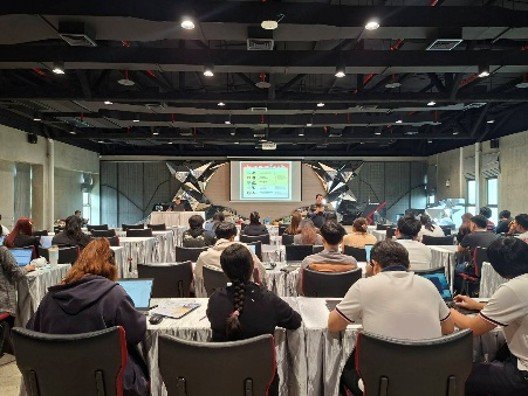
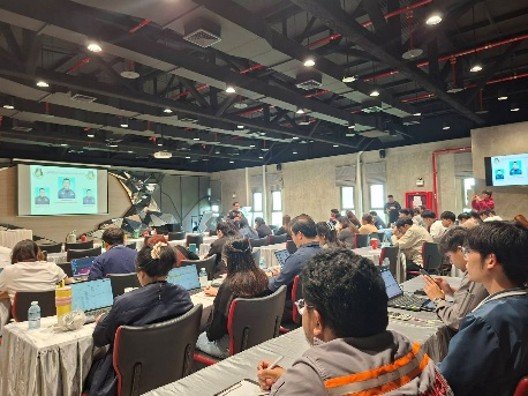
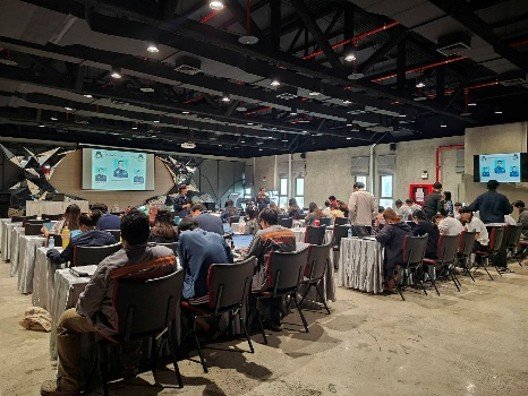
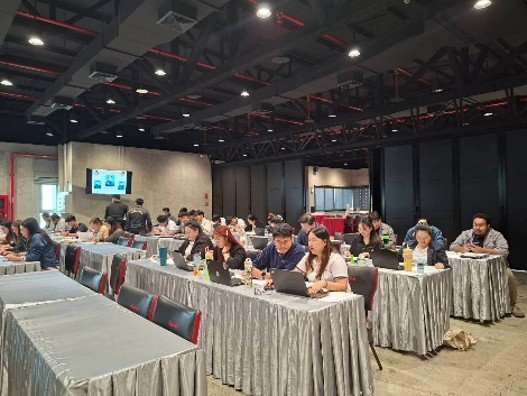
Examples of Training and Seminar Activities for Employees and Executives
QCC (Quality Control Circle) & Kaizen Programs
The QCC (Quality Control Circle) and Kaizen Programs serve as key mechanisms for fostering a culture of continuous improvement within the Company. In 2025, the Company expanded these programs to include employees across all functions, providing every department with opportunities to present initiatives aimed at improving and developing their work processes and enhancing operational efficiency across all areas of the organization.
The Company organizes an annual improvement project competition based on clearly defined, transparent, and standardized evaluation criteria. Outstanding projects are recognized and awarded to acknowledge employees’ achievements and encourage continuous improvement. The results and innovative initiatives arising from these programs are also applied to actual operations, while employee participation and contributions are incorporated as part of the annual performance evaluation process.
These programs deliver benefits to both the organization and its employees by enhancing operational efficiency, reducing costs, improving quality and safety, and strengthening analytical thinking and teamwork skills. They also contribute to building a culture of continuous learning and sustainable improvement throughout the organization.



QCC (Quality Control Circle) & Kaizen Project Competition
Projects Submitted under the Program
โครงการ/กิจกรรม
จำนวนผลงานส่งเข้าประกวด
Column 4
Row 1
ปี 2567
ปี 2568
QCC
6
6
Kaizen
20
8
In addition, the Company continues to monitor the progress of its academic collaboration with King Mongkut's Institute of Technology Ladkrabang (KMITL), with the aim of promoting research and enhancing employees’ knowledge, skills, and professional capabilities. A total of 7 employees are currently participating in the program, comprising:
- Master’s Degree: 2 employees
- Doctoral Degree: 5 employees
Based on academic progress monitored each semester, all seven employees have achieved very good academic performance. In addition, they have conducted research that contributes to the Company’s business and organizational development.
Examples include a comparative study of artificial neural network techniques for lightning prediction using weather data, as well as the development of mathematical models for lightning warning and weather simulation.
- Corporate Corporate
- Product & Solution Product & Solution
- Research & Innovation Research & Innovation
- Kumwell Academy Kumwell Academy
- Investor Relations Investor Relations
- Sustainability Sustainability
- Document Downloads Document Downloads
- Distributor Directory Distributor Directory
- Contact Contact
Product & Solution
Investor Relations