
Driving Sustainability
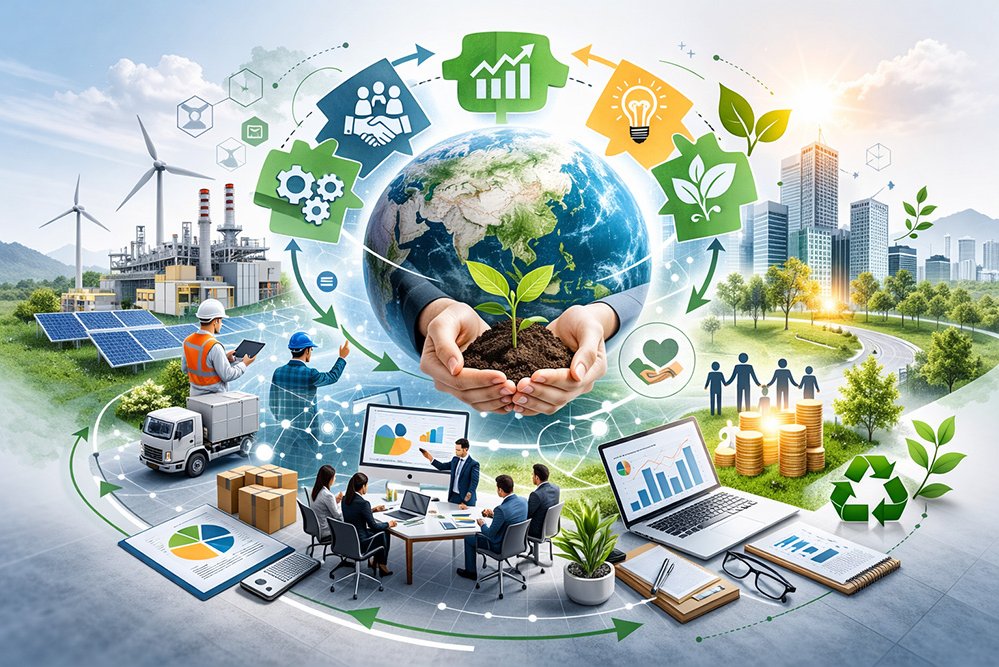
Through comprehensive analysis of internal and external factors, the Company assesses potential impacts on both its operations and stakeholders across the entire value chain. These key issues are then integrated into the formulation of policies, strategies, objectives, action plans, and performance indicators to effectively respond to stakeholder needs and expectations in a balanced manner.
The Company is committed to conducting its business by integrating sustainability management into all aspects of its operations. By adopting internationally recognized frameworks, Kumwell has been driving its sustainability strategy for over a decade, focusing on long-term value creation for both the organization and society.
" Approach 1: ESG Risk – Sustainability Risk Management "
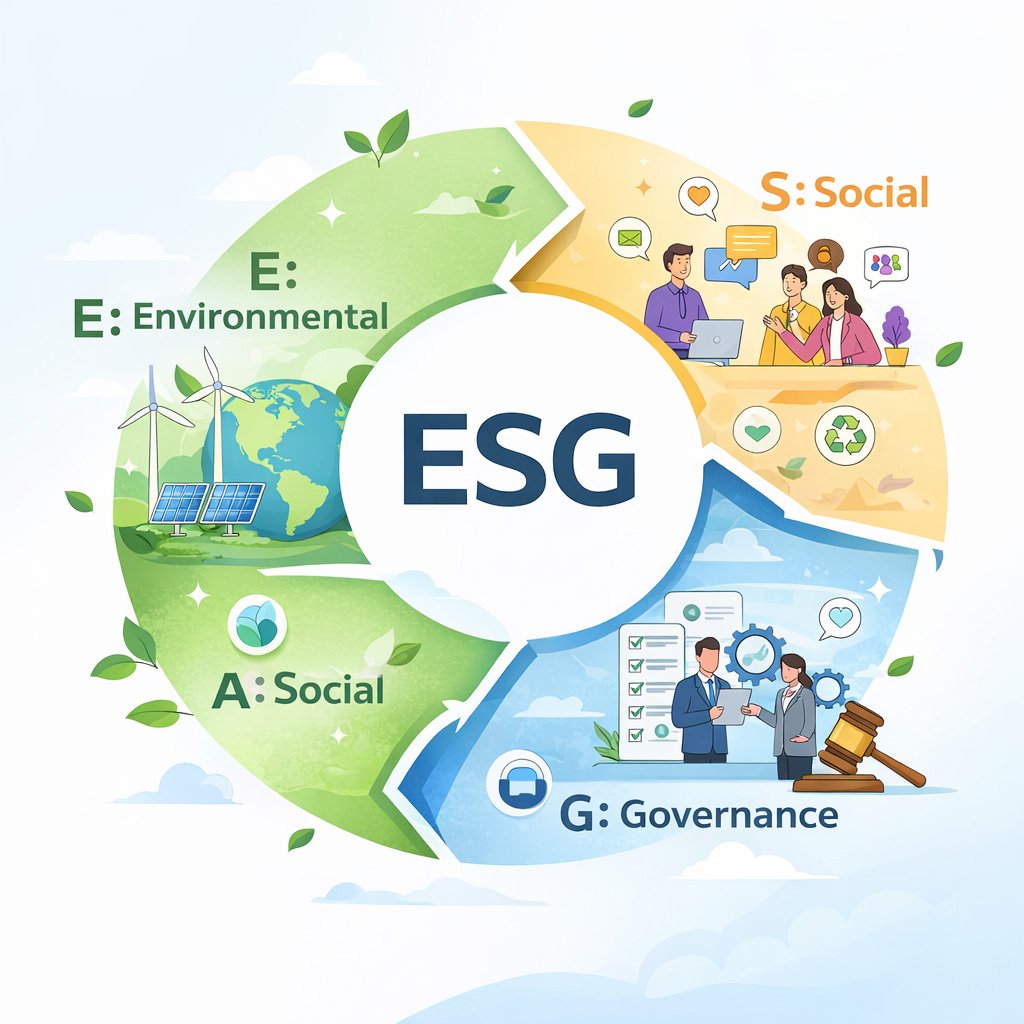
E: Environmental
S: Social
G: Governance
" Approach 2: SDGs (Sustainable Development Goals) "
The United Nations’ Sustainable Development Goals (SDGs) consist of 17 goals across 5 dimensions: Planet, People, Prosperity, Peace, and Partnership. The Company supports the achievement of the following key goals:

Goal 4: Quality Education
Ensure inclusive and equitable quality education and promote lifelong learning opportunities for all.
Goal 11: Sustainable Cities and Communities
Make cities and human settlements inclusive, safe, resilient, and sustainable.

Goal 13: Climate Action
Strengthen resilience and adaptive capacity to climate-related hazards and natural disasters in all countries.
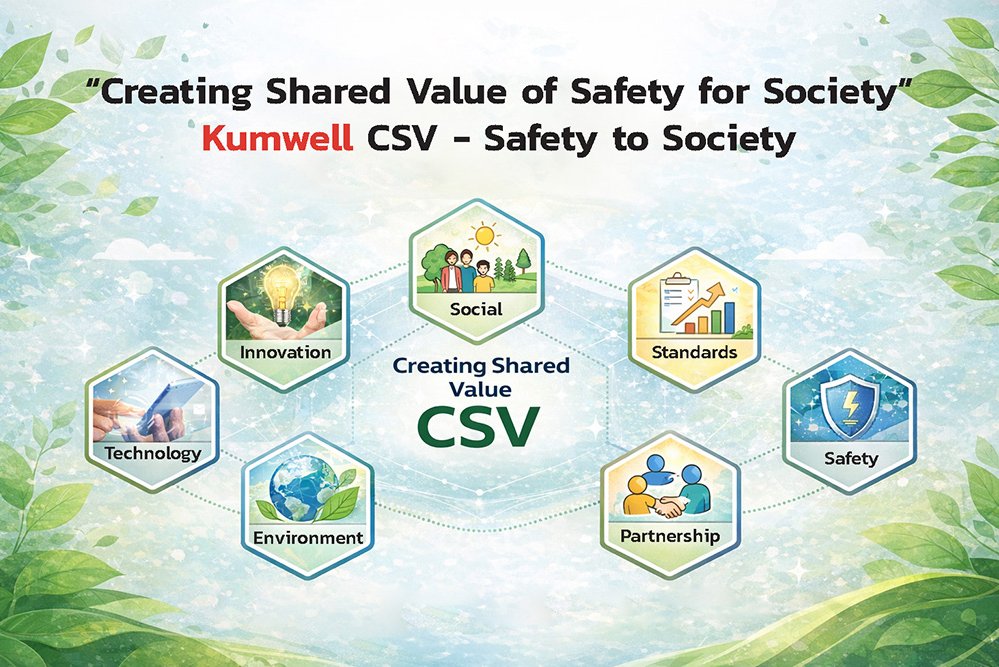
" Approach 3: CSV (Creating Shared Value)
Safety to Society "
This approach focuses on addressing societal needs by fostering collaboration between the business sector and society, creating shared value for both.
Through its long-standing sustainability commitment, “Kumwell CSV: Safety to Society,” the Company has been delivering knowledge and expertise for over a decade to help reduce risks and potential damage to lives, assets, and operational systems across all sectors.
This initiative has further expanded into partnerships with stakeholders, networks, and customers, enabling the Company to grow its business in the innovation-driven market both domestically and internationally. At the same time, it ensures a balanced response to the needs and expectations of stakeholders throughout the value chain.
As a result, the Company has established a structured approach to managing key sustainability issues to drive long-term success.
Value Chain Analysis and Materiality Assessment
Comprehensive stakeholder engagement is a core foundation of sustainable business operations. The Company places strong emphasis on strategic corporate communication management, covering information systems, communication technologies, as well as both internal and external communications that reflect the needs, expectations, and concerns of all stakeholder groups.
Engagement is conducted through both formal and informal channels, including meetings, seminars, surveys and questionnaires, telephone conversations, and online communication platforms. The insights gathered are systematically analyzed and prioritized to identify key material issues, which are then integrated into the Company’s sustainability strategies and stakeholder relationship management approach.
This process enables the continuous development of products, services, solutions, and new business models that enhance stakeholder satisfaction, trust, and engagement, while supporting the Company’s long-term growth. It also strengthens the Company’s competitiveness and operational capabilities, driving sustainable business development.
Accordingly, the Company has established a structured approach to analyzing, managing, and engaging with stakeholders as follows:
Value Chain Analysis and Stakeholder Materiality Assessment
The Company conducts value chain analysis to identify both internal and external stakeholders. It then gathers insights on stakeholder needs, expectations, and concerns through a variety of formal and informal engagement methods.
These stakeholder insights are evaluated to determine key material issues at the organizational level, which are subsequently used to define strategic priorities and guide stakeholder relationship management under the sustainability framework.
The Company regularly reviews its value chain and stakeholder groups on an annual basis to ensure relevance and alignment with evolving business and sustainability contexts. The most recent value chain and stakeholder groups are presented as follows:
The Company’s value chain consists of four key activities:

1. Research and Innovation
The Company focuses on research and innovation to develop product prototypes that effectively address the needs, expectations, and concerns of customers, partners, networks, and society.

2. Procurement
Procurement activities cover the sourcing of raw materials, semi-finished goods, finished products, components, software, and services, ensuring efficiency and quality throughout the supply process.
3. Production and Delivery
This process encompasses product design, production system design, and the transformation of raw materials and semi-finished goods into finished products and innovations. It also includes product delivery to customers and partners, covering receiving, storage, and distribution processes, with consideration for environmental and community impacts.

4. Marketing and Sales
Marketing and sales activities aim to create a positive experience for customers and partners throughout the entire journey—before, during, and after product and service usage. Customer feedback and complaints are systematically collected and analyzed to improve products and services, leading to the development of new solutions and business opportunities that meet market demands.
Building Strong Relationships with All Stakeholder Groups
Kumwell’s stakeholders are classified into 9 key groups.
Stakeholder Groups
Indicators
Customer
Users of lightning protection systems and safety innovations in the form of products and services, such as building owners, business owners, and business executives.
Business Partner
Purchasers of lightning protection systems and safety innovations in the form of products and services, such as distributors, dealers, retailers, contractors, and/or customers.
Supplier
Suppliers of raw materials, products, and services to the Company, such as raw material vendors, service providers, subcontractors, and contractors.
Investor
Providers of capital to the Company for investment returns, such as institutional investors, retail investors, and shareholders.
Employee
Personnel who perform work and drive the organization forward.
Networking
Government and private sector organizations that establish standards, rules, and regulations related to products and services, both domestically and internationally, such as TISI, EIT, the Council of Engineers, NBTC, IEC, IEEE, and UL.
Community
Communities surrounding the Company’s operating locations.
Social
Cities, countries, and the world, with consideration for sustainability in terms of:
• ESG risk guidelines
• SDGs (the United Nations Sustainable Development Goals)
• CSV (Creating Shared Value)
Government Authority
Regulators and supervisory authorities responsible for issuing regulations and monitoring compliance.
Materiality Analysis and Prioritization of Sustainability Issues
The Company places importance on issues related to its business operations, both internal and external, as well as on the expectations of all stakeholder groups identified through the stakeholder engagement and relationship-building processes described above. The Company therefore takes these two dimensions into consideration in determining and prioritizing material sustainability issues, in accordance with the following process:
Step 1: Identification of Organizational Material Issues
The Company analyzes both external and internal factors, such as global and national trends, sustainable development goals, the needs and expectations of stakeholders throughout the value chain across all Company activities, organizational risks, and business opportunities. These factors are then considered in identifying impact issues that are important to both the Company and its stakeholders, covering environmental, social, and governance aspects that may affect the Company’s ability to operate sustainably.
Step 2: Assessment and Prioritization of Sustainability Issues
The Company assesses and prioritizes the impact issues that are important to both stakeholders and the Company. Such issues are considered from two perspectives: their significance to stakeholders and their significance to the Company. The issues are then prioritized accordingly.
Step 3: Review and Validation of the Prioritization of Sustainability Issues
The Company reviews and validates the results of the prioritization of sustainability issues to ensure that the identified issues reflect an appropriate balance between the significance to the Company and to its stakeholders. The Company also establishes approaches for stakeholder engagement in relation to these issues. The results are then submitted to the Chief Executive Officer for approval and reported to the Board of Directors for acknowledgment. In addition, relevant executives in each function are assigned responsibility for implementing the established approaches.
The Company sets performance indicators and targets for each material business issue in order to evaluate operating results at the organizational, functional, and departmental levels. The Company is also committed to continuous sustainability development by welcoming suggestions and feedback from stakeholders through various channels, in order to support ongoing improvement and periodic reviews of sustainability policies, strategies, and management goals.
In the past year, the Company reviewed the outcomes and prioritized its material sustainability issues as follows:
Prioritization of Material Sustainability Issues
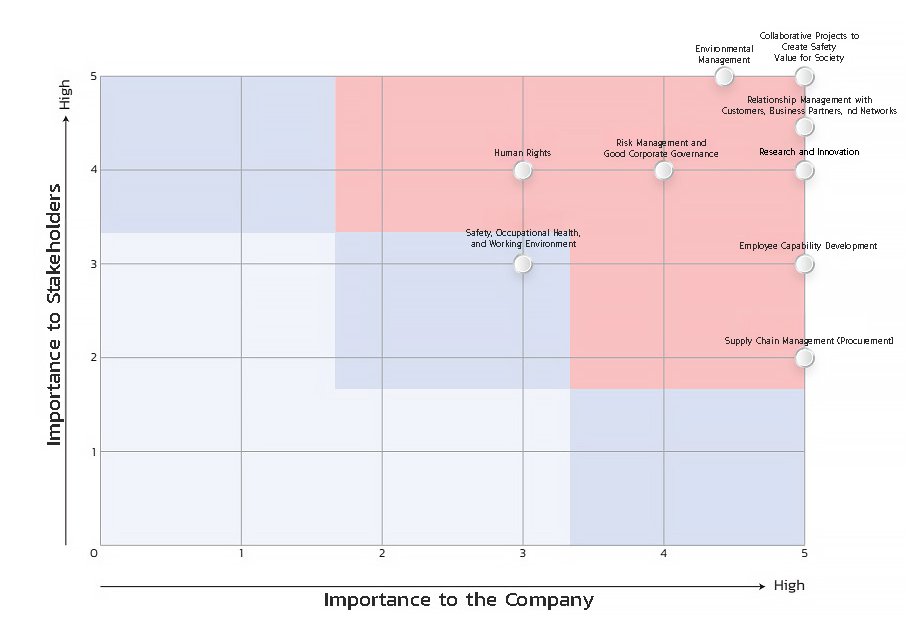

Material Sustainability Issues
Environment
Social
Governance
Collaborative Projects to Create Safety Value for Society
Research and Innovation
Relationship Management with Customers, Business Partners, and Networks
Risk Management and Good Corporate Governance
- Corporate Corporate
- Product & Solution Product & Solution
- Research & Innovation Research & Innovation
- Kumwell Academy Kumwell Academy
- Investor Relations Investor Relations
- Sustainability Sustainability
- Document Downloads Document Downloads
- Distributor Directory Distributor Directory
- Contact Contact
Product & Solution
Investor Relations