Occupational Health and Safety Risk Control
and Prevention Measures
The Company establishes risk control and prevention measures based on the results of risk assessments and the defined risk classification levels. Appropriate control measures are implemented according to the level of risk, including the development of safe work procedures and strict supervision to ensure compliance, particularly in high-risk areas.
The Occupational Safety, Health and Working Environment Committee (Safety Committee), together with relevant departments, conducts inspections of high-risk areas to ensure compliance with the Company’s established control measures. These measures are implemented in accordance with the ISO 45001 Occupational Health and Safety Management System and the ISO 14001 Environmental Management System to prevent accidents and reduce the risk of work-related injuries and illnesses.
1). Improvement of Workplace Safety Regulations and Manuals
The Occupational Safety, Health and Working Environment Committee (Safety Committee) and the Safety Department (HAS) regularly review risk assessments across work processes to ensure comprehensive coverage. Appropriate preventive measures identified through these assessments are incorporated into the Company’s workplace safety regulations and safety manuals.
2). Occupational Health and Safety Risk and Opportunity Assessment
All departments conduct occupational health and safety risk and opportunity assessments in accordance with ISO 45001:2018. Action plans are developed for issues identified as significant to ensure that appropriate measures are implemented and monitored.
3). Safety Training and Knowledge Development
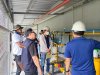
The Safety Committee and the Safety Department (HAS) jointly provide safety training and awareness programs for employees, including:
3.1) Morning Talk and Safety Talk
Safety discussions are conducted before work every Monday through Morning Talk and Safety Talk sessions.
3.2) Safety Training for New Employees and Contractors
All new employees and contractors are required to complete safety training before commencing work, with a target of 100% participation.
3.3) Annual Safety Awareness Training
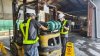
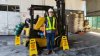
Safety awareness training is provided to employees annually. Training topics include hazardous chemicals, forklift safety, basic firefighting, LPG gas supervision, electrical safety for building electricians, and safety officer training for supervisors, among others.
Safety training hours are recorded across the factories, with participation maintained in accordance with the established training plan. Particular emphasis is placed on employees in production areas, where the risk of accidents is higher, with an average of at least 6 hours of safety training per person per year.
4). Safety Promotion Campaigns and Activities
4.1) Waste Segregation and 5S Activities
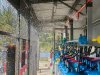
The Company promotes four-category waste segregation within its factories, together with 5S activities, to encourage a safe, clean, and well-organized workplace.
4.2) Safety Communication and Statistics
Safety information boards and safety statistics displays are provided to communicate relevant safety information and promote awareness among employees.
Safety and Environmental Performance
Topic
Objective
(1) Monthly Safety Committee Meeting
To evaluate and continuously improve safety measures, reduce workplace accidents, and enhance occupational safety performance.
(2) Job Safety Analysis (JSA)
To identify and assess work-related risks in accordance with the ISO 45001:2018 management system.
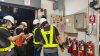
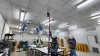
(3) Inspection of Safety Equipment and Systems, including Electrical Systems
To ensure that safety systems and equipment are ready for use and comply with applicable safety requirements and standards.
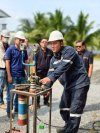
(4) Annual LPG Station Inspection
To ensure that systems and equipment are ready for use and comply with applicable safety requirements and standards.
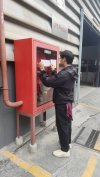
(5) Fire Protection Equipment Inspection
To ensure that systems and equipment are ready for use and comply with applicable safety requirements and standards.
(6) Mobile Crane Inspection
To ensure that systems and equipment are ready for use and comply with applicable safety requirements and standards.
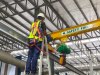
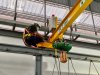
(7) Overhead Crane Inspection
To ensure that systems and equipment are ready for use and comply with applicable safety requirements and standards.
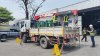
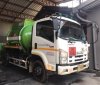
(8) Vehicle LPG Inspection
To ensure that systems and equipment are ready for use and comply with applicable safety requirements and standards.
(9) Environmental Quality Inspection
To ensure that systems and equipment are ready for use and comply with applicable safety requirements and standards.
(10) Hazardous Waste Disposal by Licensed Service Providers
To prevent adverse impacts on health and the environment, demonstrate social responsibility, and ensure strict compliance with applicable laws.
(11) Green Industry Certification by the Department of Industrial Works
To demonstrate the Company’s commitment to environmentally responsible business operations and continuous improvement.








- Corporate Corporate
- Product & Solution Product & Solution
- Research & Innovation Research & Innovation
- Kumwell Academy Kumwell Academy
- Investor Relations Investor Relations
- Sustainability Sustainability
- Document Downloads Document Downloads
- Distributor Directory Distributor Directory
- Contact Contact
Product & Solution
Investor Relations